• Space/Science
  • GeekSpeak
  • Mysteries of
    the Multiverse
  • Science Fiction
  • The Comestible Zone
  • Off-Topic
  • Community
  • Flame
  • CurrentEvents

Recent posts

Moon noticeably getting larger in live stream RL April 6, 2026 4:23 am (Space/Science)

Regime Change BuckGalaxy April 4, 2026 4:22 pm (CurrentEvents)

HERE WE GO, BABY! BuckGalaxy April 1, 2026 3:07 pm (Space/Science)

April Fool's Day ER April 1, 2026 7:56 am (Space/Science)

A Big Beautiful Bunker podrock March 31, 2026 10:11 am (CurrentEvents)

Artemis II is scheduled to launch on Wednesday, April 1, 2026, at 6:24 p.m. EDT BuckGalaxy March 30, 2026 3:09 pm (Space/Science)

Dragonfly mission to Titan BuckGalaxy March 29, 2026 12:01 pm (Space/Science)

It's a long long road... BuckGalaxy March 26, 2026 4:49 pm (Space/Science)

Lax Americana BuckGalaxy March 24, 2026 1:18 pm (CurrentEvents)

Glad... BuckGalaxy March 21, 2026 4:30 pm (Flame)

Blu-Ray ER March 15, 2026 11:27 am (Off-Topic)

Trump Administration Readies Plans to Dismantle Renowned Science Lab BuckGalaxy March 13, 2026 11:46 pm (Space/Science)

Home » Space/Science

Astronomers Peer into Atmosphere of Rare Exoplanet that 'Shouldn't Exist' . . . November 2, 2020 2:24 pm DanS

Astronomers Peer into the Atmosphere of a Rare Exoplanet that ‘Shouldn’t Exist’

By Michelle Starr | ScienceAlert

OCTOBER 28, 2020 | The discovery of the extraordinary exoplanet LTT 9779b was first announced a month ago. Just 260 light-years away, the planet was immediately pegged as an excellent candidate for follow-up study of its curious atmosphere. But it turns out we didn’t even have to wait too long to learn more.


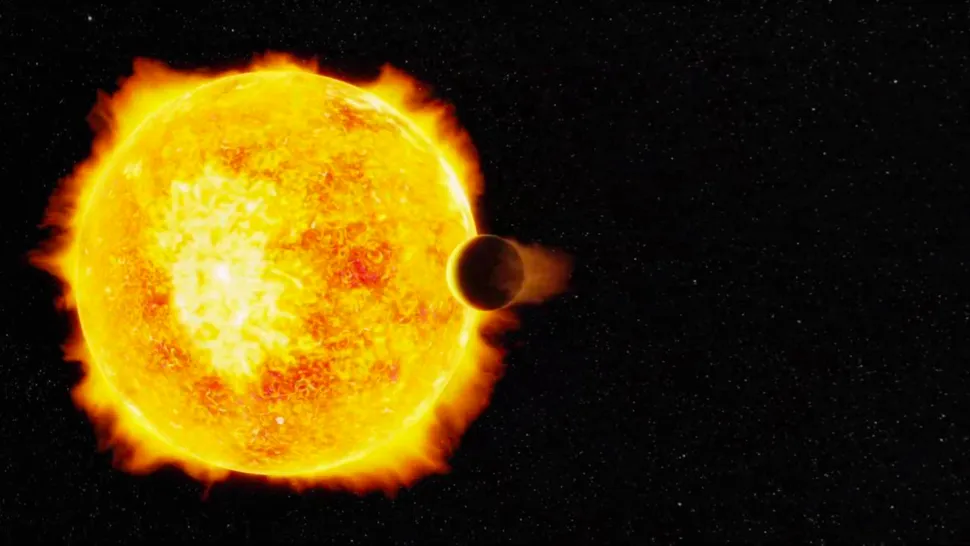
(Image: © Ricardo Ramirez/Universidad de Chile)

LTT 9779b is a little bigger than Neptune, orbiting a Sun-like star – fairly normal so far. But two things are really peculiar. It’s so close to its star, the planet orbits once every 19 hours; and, in spite of the scorching heat it must be subjected to at that proximity, LTT 9779b still has a substantial atmosphere.

Infrared observations collected by the now-retired Spitzer Space Telescope included the planet’s host star, and astronomers have now analysed those data, publishing their results in a couple of studies.
  • I really want to learn more about this planet now. by Vitruvius 2020-11-02 15:14:54

    Search

    The Control Panel

    • Log in
    • Register