• Space/Science
  • GeekSpeak
  • Mysteries of
    the Multiverse
  • Science Fiction
  • The Comestible Zone
  • Off-Topic
  • Community
  • Flame
  • CurrentEvents

Recent posts

How we did it in the old Navy II. ER December 4, 2025 5:09 pm (CurrentEvents)

How we did it in the old Navy. ER December 4, 2025 4:17 pm (CurrentEvents)

Rocket man BuckGalaxy December 1, 2025 9:54 pm (CurrentEvents)

Yesterday was the 332nd day of the year 2025 ER November 30, 2025 1:41 pm (Space/Science)

All I know is what I see on the Internet. ER November 30, 2025 7:21 am (CurrentEvents)

I'm a California Man BuckGalaxy November 27, 2025 2:35 pm (CurrentEvents)

Collapse of the service access platform at Site 31 in Baikonur? BuckGalaxy November 27, 2025 12:54 pm (Space/Science)

Why the reflections? ER November 27, 2025 8:16 am (GeekSpeak)

So you Millennials think the world has given you a raw deal? ER November 25, 2025 5:27 pm (Off-Topic)

This is not a drill. NOT a drill. General Quarters, General Quarters. All hands man your battle stations. ER November 24, 2025 4:58 pm (CurrentEvents)

Xi called Trump RobVG November 24, 2025 10:26 am (CurrentEvents)

Home » Space/Science

Watch NASA Light a Fire on a Spaceship on Purpose. You Know, for Science . . . February 18, 2021 10:22 am DanS

Watch NASA Light a Fire on a Spaceship on Purpose. You Know, for Science.
Don’t panic, it’s on purpose.

By Elizabeth Howell | Space.com Contributing Writer

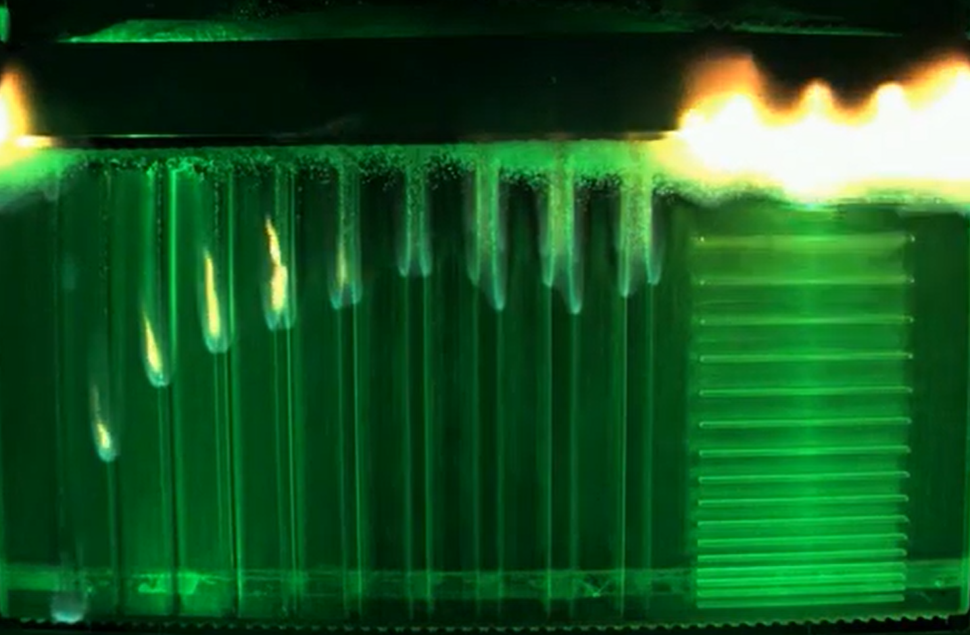
February 11, 2021 | A fiery experiment deliberately lit in a cargo spacecraft last month monitored larger and more dynamic flames than most previous efforts to learn how fire works in space have.

The Spacecraft Fire Safety Experiment-V (Saffire-V), which occurred after a Northrop Grumman Cygnus spacecraft departed the International Space Station on Jan. 6, is the latest in a series of fire studies to protect astronauts on long-term missions.


A screenshot shows the Saffire-V experiment mid-flame. (Image credit: NASA)

Saffire-V lasted 26 hours, then the Cygnus spacecraft, which was filled with trash, burned up safely in Earth’s atmosphere as planned.

The experiment involved lowering the spacecraft pressure and filling it with oxygen similar to what humans may breathe in future spacecraft. Sensors embedded in the spacecraft, along with cameras, measured temperature variations, oxygen levels and flame growth. The data could improve fire detection and assist with cleanup after a fire, NASA said in a statement.
    Search

    The Control Panel

    • Log in
    • Register