Preliminary Investigation Offers Possible Cause of Arecibo Observatory Telescope Collapse
By Meghan Bartels | SPACE.com Senior WriterJanuary 25, 2021 | An ongoing investigation of the December collapse of the iconic radio telescope at Arecibo Observatory in Puerto Rico offers early evidence that a manufacturing issue may have contributed to the failure.
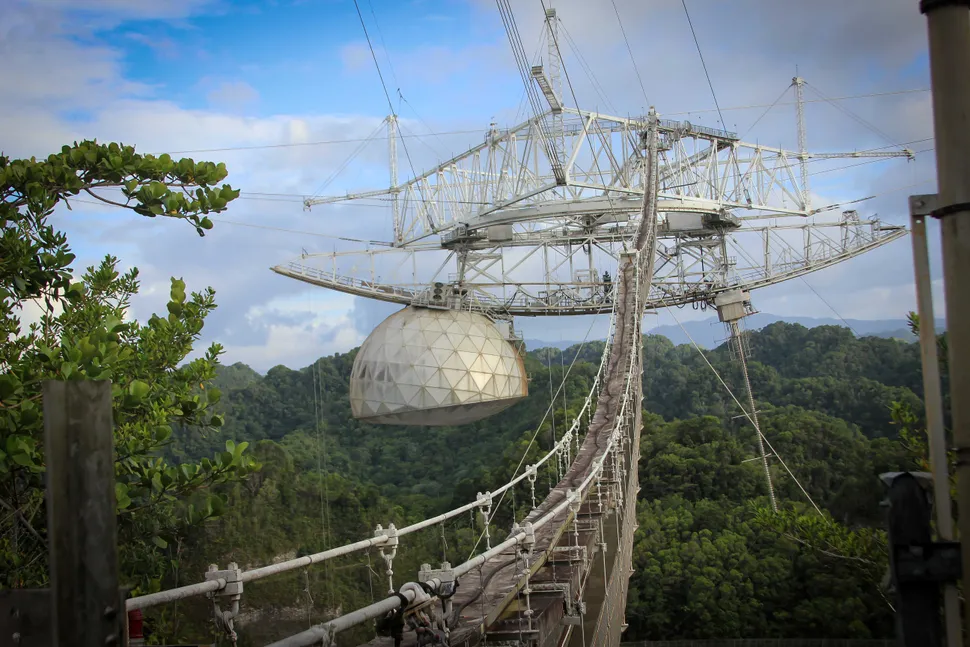
An image of Arecibo Observatory’s iconic radio telescope before damage that began in August 2020; the curved azimuth arm and the dome suspended from it are both visible.
(Image: © University of Central Florida)The telescope’s massive science platform, which weighed in at 900 tons, was suspended above the vast radio dish by three dozen supporting cables. But in August 2020, one of those cables slipped out of its socket; before the failure could be repaired, a second cable snapped outright in November. The U.S. National Science Foundation (NSF), which owns the site, determined that the platform was too unstable to safely repair and decided to decommission the instrument. Before that could happen, the telescope collapsed on its own on Dec. 1.
Engineers have been investigating the cables since August, and crews have been cleaning up the debris and monitoring environmental concerns since the collapse,observatory director Francisco Cordova said during a panel discussion today (Jan. 21). “The site cleanup and the debris removal really is ongoing,” Cordova told the panel, which is focused on small solar system objects like asteroids in order to inform the National Academies committee that’s putting together the document that will shape planetary science priorities for the next decade. “In general, I think that is moving in the right direction.”