• Space/Science
  • GeekSpeak
  • Mysteries of
    the Multiverse
  • Science Fiction
  • The Comestible Zone
  • Off-Topic
  • Community
  • Flame
  • CurrentEvents

Recent posts

50 sites BuckGalaxy June 10, 2026 9:19 pm (Off-Topic)

1700 free online university courses BuckGalaxy June 10, 2026 8:58 pm (Off-Topic)

Sigh. podrock June 10, 2026 12:29 pm (CurrentEvents)

The Platner Disaster, plus... BuckGalaxy June 9, 2026 1:43 pm (Flame)

Starfall BuckGalaxy June 2, 2026 6:30 pm (Space/Science)

It keeps getting worse... BuckGalaxy June 2, 2026 3:11 pm (Flame)

Starship Troopers on the Moon BuckGalaxy June 2, 2026 2:51 pm (Space/Science)

Musk wants self-sustaining space colonies BuckGalaxy May 31, 2026 6:11 pm (Space/Science)

Federal judge reopens Trump’s IRS case and demands to know if her court was defrauded. BuckGalaxy May 29, 2026 10:38 pm (Flame)

Ukraine winning the war BuckGalaxy May 29, 2026 11:14 am (CurrentEvents)

New Glenn explodes in big setback for Blue Origin BuckGalaxy May 28, 2026 7:54 pm (Space/Science)

Firefly set to visit Gruithuisen Domes BuckGalaxy May 28, 2026 4:32 pm (Space/Science)

Home » Space/Science

Russian Scientists just Deployed a Giant Telescope Beneath Lake Baikal . . . March 18, 2021 1:01 pm DanS

Why Russian Scientists just Deployed a Giant Telescope Beneath Lake Baikal

By Stephanie Pappas | Live Science Contributor

March 17, 2021 | Russian scientists have deployed a giant telescope into the frigid depths of Lake Baikal in southern Siberia to search for the tiniest known particles in the universe.


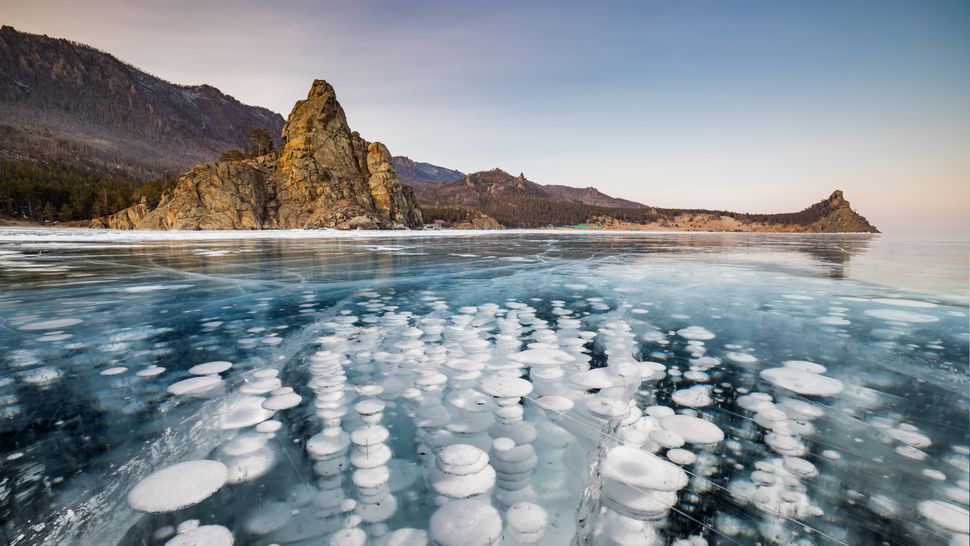
Bubbles freeze over in Lake Baikal during the winters in southern Siberia. (Image credit: Anton Petrus via Getty Images)

The telescope, Baikal-GVD, is designed to search for neutrinos, which are nearly massless subatomic particles with no electrical charge. Neutrinos are everywhere, but they interact so weakly with the forces around them that they’re hugely challenging to detect.

That’s why scientists are looking under Lake Baikal, which, at 5,577 feet (1,700 meters) deep, is the deepest lake on Earth. Neutrino detectors are typically built underground to shield them from cosmic rays and other sources of interference. Clear freshwater and thick, protective ice cover make Lake Baikal an ideal place to search for neutrinos, researchers told the news service AFP on March 13.
    Search

    The Control Panel

    • Log in
    • Register